Wind Turbines for Home Use: A 2025 Guide
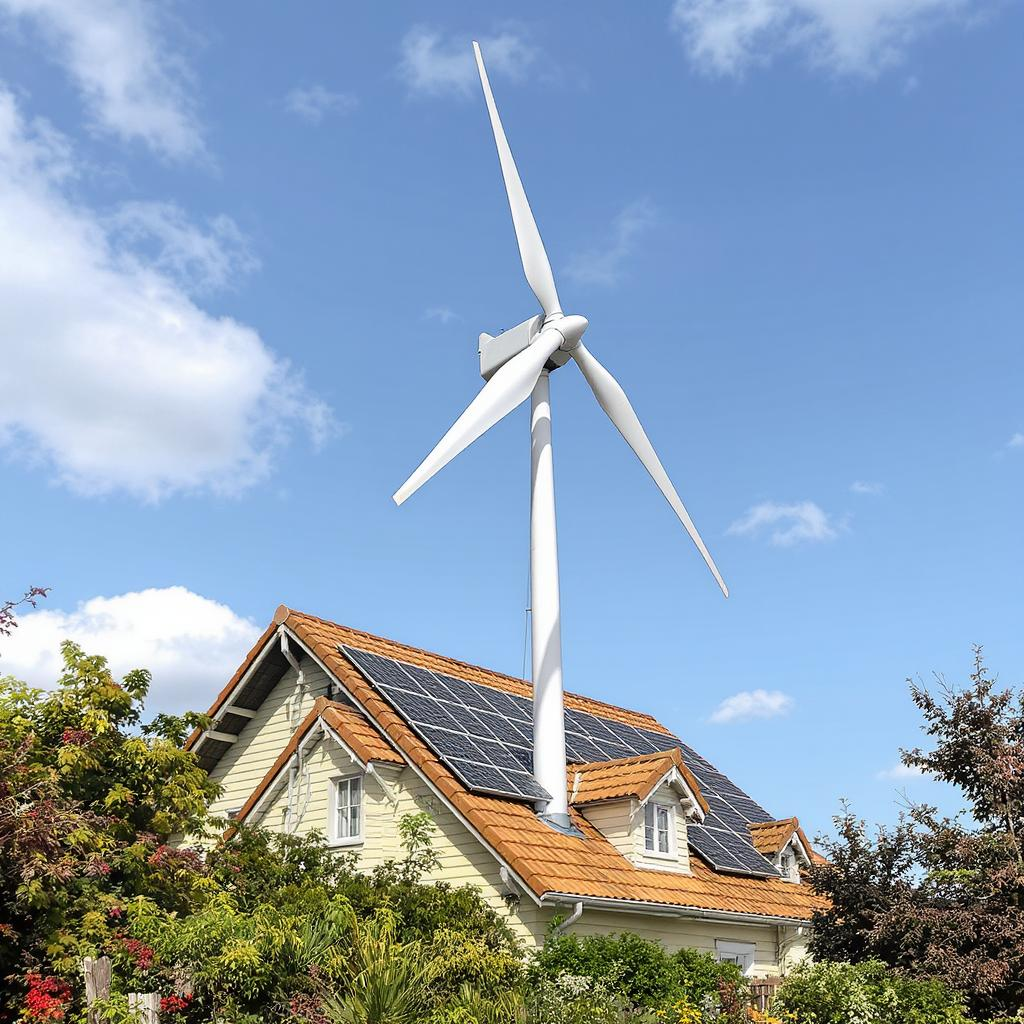
Hey there, curious minds! Have you ever seen those giant spinning blades on a hill and wondered how they make electricity? Those are wind turbines, and they’re like super cool fans that turn wind into power for your home. In 2025, there are some awesome new wind turbines you can use right at your house. Let’s dive into what’s new, how they work, and whether they’re better than solar panels.
What Are the Latest Wind Turbines for Your Home?
In 2025, there are some fantastic wind turbines designed for homes. Here are a few of the best ones you can find:
- PIKASOLA Wind Turbine Generator 400W (Amazon): This turbine can produce up to 400 watts of power, enough to run small appliances like lights or a fan. It has durable nylon fiber blades and a smart MPPT controller to maximize energy.
- VEVOR Wind Turbine Generator 600W (Amazon): This one generates up to 600 watts and has a sleek design with aluminum alloy blades. It’s built to handle tough weather and comes with a charge controller for easy setup.
- YHOZHUT Wind Turbine 1000W (Amazon): This turbine delivers up to 1000 watts and features a vertical-axis design, making it perfect for smaller spaces or areas with changing wind directions.
- TESUP Atlas Vertical Turbine (TESUP Australia): This high-tech turbine can produce up to 10 kW and comes with a smart controller you can monitor from your phone.
These turbines use cool tech like MPPT controllers (Maximum Power Point Tracking), which help them grab as much energy as possible from the wind. Some even have Bluetooth or IoT (Internet of Things) features, so you can see how they’re doing from anywhere!


Photo credit: Amazon
Can They Power Your Whole House?
So, can a wind turbine power everything in your house, like your gaming console, lights, and air conditioning? It depends on how much electricity your home uses and how windy your area is.
The average US home uses about 10,649 kilowatt-hours (kWh) of electricity each year. To power your whole house without using the grid (called going “off-grid”), you’d need a wind turbine system that can produce 6 to 8 kilowatts (kW) of power, assuming the wind blows enough. Most home turbines, like the ones above, produce 200 to 2,000 watts (0.2 to 2 kW), so they might not be enough to run everything on their own.
But don’t worry! Even a smaller turbine, like the Ista Breeze i-2000 (2 kW), can make a big dent in your electricity bill. For example, if your home uses 30 kWh per day, a 2 kW turbine in a windy area (with a 20% capacity factor) could produce about 3.5 kWh per day, covering part of your needs. The rest can come from the grid or other sources like solar panels.
To know if it’ll work for you, check your area’s wind speed. Most turbines need winds of 10–14 meters per second (m/s) (about 22–31 mph) to work at their best. You can find wind maps online or ask a local expert!
Are Wind Turbines More Cost-Effective Than Solar Panels?
You might be wondering if wind turbines are a better deal than solar panels. Let’s compare them to see which one might be right for your home.
Cost Comparison
- Solar Panels: A typical 7.2 kW solar system costs around $21,600 before any discounts (NRG Clean Power). That’s about $2.50 per watt. Maintenance is super low, only $75–$150 per year, and you’ll usually get your money back in about 7.5 years through energy savings.
- Wind Turbines: A 3.5 kW wind turbine system costs between $5,000 and $26,000, or about $1.50 per watt for smaller systems. But to match a 7.2 kW solar system, you’d need a bigger wind setup, which could cost $11,000–$22,000. Plus, maintenance is pricier, at $100–$2,000 per year, and it might take 4–12 years to pay off.
So, solar panels are usually cheaper upfront for the same amount of power, and they cost way less to maintain.


Which Is Better for You?
It depends on where you live:
- Wind Turbines: These are awesome if you live in a rural, windy area with lots of open space. They’re super efficient (converting 60–90% of wind energy into electricity) but need steady winds and room for installation.
- Solar Panels: These are better for urban or suburban homes because they can go on your roof and don’t need as much space. They’re less efficient (converting 20–25% of sunlight) but work reliably during the day and are easier to install (SolarReviews).
If your home is in a city or doesn’t get much wind, solar panels are probably the way to go. But if you’re on a farm with strong winds, a wind turbine could be a great choice!
What’s New in Wind Turbine Technology?
Wind turbines are getting smarter and better every year. Here are some of the coolest new technologies in 2025:
- Taller Towers and Longer Blades: Bigger turbines with taller towers and longer blades catch more wind, making more electricity (NREL).
- Vertical-Axis Turbines: These stand upright and work well in smaller spaces or areas with changing wind directions, like the Pikasola 200W or TESUP Atlas (TESUP Australia).
- Smart Monitoring: Some turbines use AI to predict when they need repairs, so they don’t break down as often. Others have IoT controllers to check performance from your phone.
- Quieter Designs: New turbines are designed to make less noise, so they don’t bother you or your neighbors (Department of Energy).
- On-Site Manufacturing: Building parts of the turbine at your home can lower costs and make bigger turbines possible.
These upgrades make wind turbines more efficient, easier to use, and better for different kinds of homes.

Other Important Things to Know
Here are some extra facts about wind turbines that are good to know:
- How They Work: When the wind blows, it spins the turbine’s blades. This turns a generator inside, which makes electricity. The power can go straight to your home or be stored in batteries for later (EnergySage).
- Environmental Impact: Wind turbines are great for the planet because they don’t produce pollution like coal or gas. However, they can sometimes harm birds or bats if they fly into the blades. New designs are being made to reduce this risk, like placing turbines away from bird migration paths (NRG Clean Power).
- Noise: Modern turbines are much quieter than older ones. You might hear a soft whooshing sound, but it’s usually not loud if the turbine is placed far from your house.
- Looks: Some people think wind turbines look cool, like giant pinwheels, while others might not like them. They’re often placed in open areas, so they won’t block your view.
- Government Help: In some places, you can get tax breaks or grants to help pay for a wind turbine. Check out WINDExchange or DSIRE to see what’s available in your area.
Should You Get a Wind Turbine?
If you’re thinking about getting a wind turbine, here’s what to consider:
- Wind Speed: Make sure your area has enough wind (check local wind maps or ask an expert).
- Space: You’ll need open space, away from trees or buildings, for the turbine to work well.
- Budget: Be ready for the upfront cost and yearly maintenance, but look into government incentives to save money.
- Goals: If you just want to lower your electricity bill, a smaller turbine might be enough. If you want to go off-grid, you might need a bigger system or combine it with solar panels.
Wind turbines are a fantastic way to use clean energy, but they’re not perfect for every home. If you live in a windy, open area, they could be a great choice to help power your home and save the planet!

Conclusion
Wind turbines in 2025 are more advanced than ever, with cool features like smart monitoring and vertical designs. While they might not power your entire house, they can save you money on electricity and help the environment. Compared to solar panels, wind turbines are better for windy, rural areas but cost more to maintain. Whether you choose wind, solar, or both, you’re taking a step toward a greener future. Keep exploring, and maybe you’ll be the one designing the next big wind turbine!
| Wind Turbine Model | Power Output (W) | Key Features | Approx. Cost (USD) |
|---|---|---|---|
| PIKASOLA 400W | 400 | Nylon fiber blades, MPPT controller, low start-up speed | $300–$400 |
| VEVOR 600W | 600 | Aluminum alloy blades, weather-resistant, charge controller | $400–$500 |
| YHOZHUT 1000W | 1,000 | Fiberglass blades, low start-up speed, high efficiency | $400–$600 |
| SmarketBuy 800W | 800 | Vertical axis, compact design, MPPT controller | $500–$600 |
Key Citations
- Top 10 Wind Turbines of 2025 for Clean Energy at Home
- Solar Energy vs Wind Energy: Cost, Efficiency, Applicability
- Next-Generation Wind Technology by Department of Energy
- NREL: 80% More Wind Energy Potential by 2025
- Wind Farms of the Future: More Powerful and Quieter
- Solar vs. Wind Energy: Which Is Better?
- Is Solar or Wind a Better Way to Power Your Home?
- DSIRE: Renewable Energy Incentive Programs
- PIKASOLA Wind Turbine 400W on Amazon
- VEVOR Wind Turbine 600W on Amazon
- YHOZHUT Wind Turbine 1000W on Amazon
- SmarketBuy Wind Turbine 800W on Amazon
- Pikasola Vertical Wind Turbine on Amazon