The Unconquered Peak: Exploring the Mysteries of Mount Kailash
Introduction: Where Legends Touch the Sky
Ever stumble upon a place so steeped in myth that it feels like the earth itself is whispering secrets? Imagine a mountain that has never felt the tread of a climber's boot, a place shrouded in enigma, and perhaps, just perhaps, a spot where time itself bends a little. Welcome to Mount Kailash.
Nestled deep within the formidable Himalayas, this isn't just a mountain; it's a living, breathing mystery. It's a spiritual powerhouse, a geographical oddity, and the source of tales that can leave you questioning reality. So, buckle up as we journey into the lore, the quasi-science, and the profound mystique of this legendary peak.
Mount Kailash: A Snapshot of the Sacred
- Location, Location, Location:Picture Tibet's Ngari Prefecture. Remote doesn't even begin to cover it. This is high country, part of the Transhimalaya range, where the air thins and the views expand into infinity.
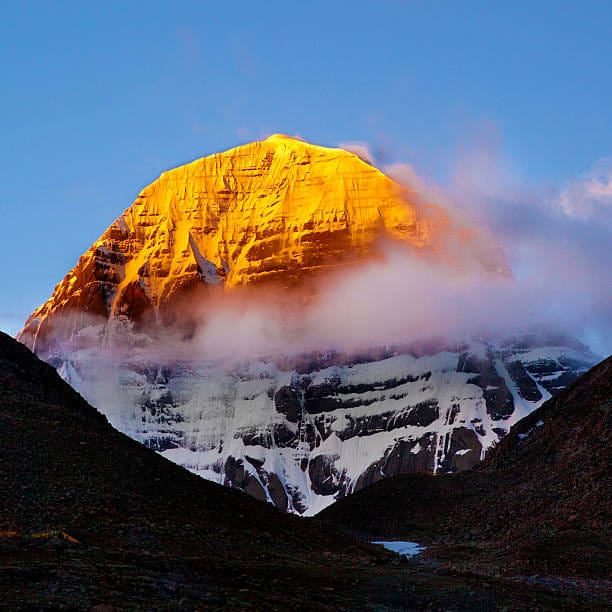
- The Pyramid of the World: Forget your typical jagged mountain peaks; Kailash is different. It has a strikingly symmetrical, almost artificially precise pyramidal shape, reaching a height of 6,638 meters (or 21,778 feet for those of us who still think in imperial).
- Geological Wonders: The mountain's composition is intriguing. It's primarily made of thick conglomerate rocks resting on a granite base. Some geologists point to natural erosion processes to explain its unique shape. But, of course, there are whispers of ancient construction, a theory we'll get to a little later. It does make you wonder, doesn't it?
- The Fountainhead of Asia: Here's a mind-blowing fact: This single mountain serves as the origin point for four of Asia's major rivers. We're talking about the Indus, Sutlej, Brahmaputra, and the Karnali, which is a significant tributary of the Ganges. Not a bad resume for one mountain, eh?
A Tapestry of Ancient Faiths and History
- The Cosmic Axis (Axis Mundi): For millennia, Mount Kailash has been revered as the spiritual heart of the universe, a sacred nexus connecting the earthly and the divine. It's hard to wrap your head around that kind of history.
- Holy Home to Billions:
- Hinduism: This is considered the eternal abode of Lord Shiva and Goddess Parvati, a place where Shiva sits in perpetual meditation. Ancient texts, including the Puranas and the Rigveda, make mention of it. Remember the legend of Ravana attempting to shake the mountain? Gives you a sense of the mountain's significance.
- Buddhism: In Buddhism, Kailash is identified with Mount Meru, the mythical home of Buddha Cakrasaṃvara, and is perceived as a giant mandala. Padmasambhava, a crucial figure in Tibetan Buddhism, is also associated with this sacred mountain.
- Jainism: Jains know it as Ashtapada, the spot where Rishabhadeva, the first Tirthankara, achieved liberation, or moksha.
- Bon Religion: As Tibet's oldest spiritual tradition, the Bon religion venerates Kailash as Tise, the dwelling place of the sky goddess Sipaimen. And here's a fun fact: Bon practitioners famously circumambulate the mountain in a counter-clockwise direction, which sets them apart from other pilgrims.
- Ancient Pilgrimages:The Kailash Kora, or Parikrama, is a ritual walk around the mountain that has been undertaken for thousands of years. It's believed to cleanse sins and bestow spiritual blessings. But access to Kailash hasn't always been easy; geopolitical shifts have certainly played a role in its accessibility.
The Unconquered Summit & Its Strange Tales (Controversies & Experiences)
- The Great Prohibition: So, why hasn't anyone climbed it?
- Divine Disrespect: Officially, China has a strict ban in place because of the mountain's immense religious significance. Climbing it is seen as a sacrilege.
- Physical Formidability: Beyond the spiritual reasons, the mountain presents serious physical challenges. It boasts steep, icy, and unstable slopes, coupled with unpredictable blizzards and the ever-present challenge of thin air. It's a mountaineer's nightmare, really. Even Reinhold Messner, who was granted permission to climb it, famously refused, suggesting that climbing it would be like "conquering something in people's souls." A pretty powerful statement, if you ask me.
- Who Dared? And What Happened?
- Milarepa's Legend: Legend has it that the only person to have ever reached the summit was Milarepa, a Buddhist saint from the 12th century.
- Vanishing Expeditions & Strange Illnesses: There have been disturbing reports of mountaineers who attempted to climb Kailash either turning back due to inexplicable circumstances, returning mentally disturbed or physically ill, or even disappearing altogether. There's a particularly chilling story about a Soviet expedition in the 1980s that supposedly never made it back. Hard to verify these claims, of course, but they certainly add to the mystique.
- Time Warp Zone? Here's where things get really weird. Many pilgrims claim that their hair and nails grow at an unusually accelerated rate while near Kailash – experiencing weeks' worth of growth in just a few days. Some even report signs of rapid aging. Scientists, ever the pragmatists, speculate about magnetic anomalies or perhaps just the effects of extreme physical exertion. But who knows?
- Magnetic Mysteries & No-Fly Zones:Compasses are said to go haywire, and electronic devices malfunction in the vicinity of Kailash. Some even claim that NASA satellites have detected unusual electromagnetic energy waves emanating from the mountain. Apparently, planes are prohibited from flying directly over Kailash due to some sort of interference. Take it with a grain of salt, but it's fascinating stuff.
- The Shifting Mountain & Vanishing Paths: Some trekkers report getting disoriented, finding that paths disappear before them, or even inadvertently walking in the opposite direction of their destination, as if the mountain itself is resisting their presence.
- Divine Visions in Stone & Snow:
- "The Face of Lord Shiva": On the southern face of Kailash, a natural rock formation bears a striking resemblance to a human face, a sacred sight for Hindu pilgrims.
- Swastika & Om Parvat: At sunset, the shadows cast by the mountain can create the distinct shape of a Swastika. On the peak, snow formations sometimes resemble the "Om" symbol. Coincidence? Maybe. But it's hard to dismiss when you're there.
- The Unmelting Snowcap: Even when surrounding areas experience thawing, the crown of Kailash remains perpetually covered in white snow.
- The Hum of the Gods: Pilgrims sometimes report hearing mysterious sounds near the mountain, often described as a low hum or perhaps the sound of Lord Shiva's drum, the "damru."
- Man-Made or Masterpiece of Nature?
- The Pyramid Theory: Russian geologist Dr. Ernst Muldashev has famously theorized that Kailash is actually an ancient, man-made pyramid surrounded by smaller pyramids, suggesting the existence of a highly advanced ancient civilization.
- The Scientific View:Mainstream geology, however, attributes the mountain's unique shape to millions of years of natural erosion and tectonic activity.
- The Twin Lakes Enigma: Right next to Mount Kailash sit Lake Manasarovar, a freshwater lake considered extremely sacred, and Rakshastal, a saline and often turbulent lake. This juxtaposition is a geological oddity and, in mythology, represents the eternal battle between good and evil.
The Present: A Blend of Awe and Accessibility
- Pilgrimage Resumption: After a five-year hiatus caused by the COVID-19 pandemic and ongoing border tensions, the Kailash Mansarovar Yatra is expected to fully resume for Indian pilgrims in June 2025.
- New Ways to Witness: The "Mount Kailash Darshan from Indian Soil" initiative now offers helicopter tours from the Old Lipulekh Peak, providing a glimpse of the sacred mountain without actually crossing into Tibet.
- Strict Regulations: Permits, visas, age restrictions (generally between 12 and 70, with additional conditions for those over 70), and mandatory group travel are in place to ensure control and safety.

Looking Ahead: Conservation and Connection
- Sustainable Pilgrimage: With tourism expected to increase, there's a growing focus on environmental conservation, particularly waste management and the protection of endangered species, through initiatives such as the Kailash Sacred Landscape Conservation and Development Initiative (KSLCDI).
- Infrastructure Improvements: Enhancements are being made along pilgrimage routes, such as the Nathu La Pass, to support the growing number of pilgrims, with a focus on building acclimatization centers and maintaining roads.
- Enduring Mystique: While scientific exploration continues to seek answers, the spiritual allure and unexplained phenomena surrounding Mount Kailash will undoubtedly continue to attract seekers and fuel fascination for generations to come.
Conclusion: The Mountain that Holds its Breath
Mount Kailash endures as one of the world's most enigmatic and revered places. It stands as a testament to the enduring power of faith, the profound mysteries of the natural world, and perhaps, the inherent limits of human ambition. Whether you're inclined to believe in its supernatural powers or to marvel at its geological wonders, Kailash calls to us – not to be conquered, but to be contemplated.
To explore more about this story, you can visit:
 Max Holidays
 Resham Sengar
 Master Catherine Jigme
 Contributors to Wikimedia projects