The Dawn of a New Era: How AI is Accelerating Human Progress

Over the past ten years, artificial intelligence (AI) has rapidly shifted from a futuristic idea to a powerful agent of change across science, technology, and our world. Advancements are happening quickly, and AI now functions not merely as a tool, but as a partner in solving previously impossible problems. Its impact, from understanding biological systems to changing information access, is both substantial and groundbreaking. Here’s a look at how AI is driving human progress.
AlphaFold: Cracking Biology’s Greatest Puzzle
A remarkable AI accomplishment occurred in 2020 when DeepMind's AlphaFold overcame a 5-decade biological puzzle: determining protein structures. As life's molecular machines, proteins adopt complex 3D forms which dictate their functions. For years, researchers faced difficulties mapping these structures using experiments, a task often taking years for each protein. AlphaFold revolutionized this field.
Leveraging deep learning, it accurately predicted the structures of over 200 million proteins – almost all known to science. Experts call this “transformational,” dramatically speeding up drug creation, vaccine research, and disease understanding, including Alzheimer’s and cancer. Oxford researchers, for example, pinpointed a malaria vaccine target in months using AlphaFold. By widely sharing protein data, AlphaFold has become vital to modern biology, demonstrating AI’s power to vastly accelerate scientific breakthroughs.
Gemini: The Multi-modal Marvel
Google introduced its groundbreaking AI, Gemini, back in late 2023. This versatile system, processing text, images, audio, and video all at once, represents a major step forward. It unlocks sophisticated understanding and creative potential, finding uses everywhere from crafting unique educational materials to helping engineers pioneer sustainable design.
Gemini's power shines across fields: in healthcare, it swiftly connects medical images, patient histories, and research to aid doctors in spotting elusive illnesses. For climate science, it models intricate ecosystems, helping us refine renewable energy and anticipate severe weather. This adaptability truly highlights AI's potential—a versatile force uniting disciplines and sparking widespread innovation.
AI in Everyday Innovation
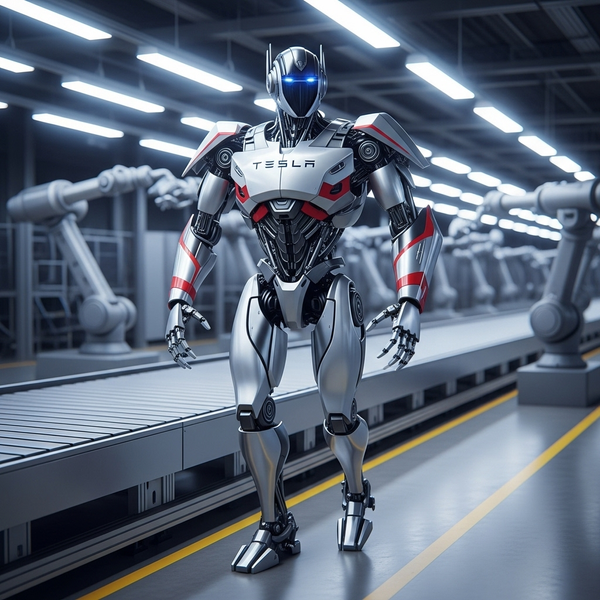
AI’s influence goes deeper than the headlines suggest—it’s quietly reshaping industries. In farming, smart algorithms analyze fields, maximizing harvests and saving precious water. Factories benefit from AI-powered robots, boosting precision and minimizing waste. And even artistic expression is blossoming: tools like DALL-E let artists instantly bring visions to life, while AI-composed music explores entirely new sounds.
The healthcare landscape is shifting faster than ever. Amazingly, AI systems can now spot cancers on medical scans with an accuracy that matches – even rivals – human experts. Take, for instance, a model from MIT aimed at breast cancer screening; it cuts down cases where something's actually wrong but is missed (false negatives) by 9%, and also reduces cases where nothing's wrong but it's flagged (false positives) by 5%. This progress alone could save countless lives. Simultaneously, companies like Insilico Medicine are using AI like high-speed chemists to invent brand-new drugs at record-setting pace. They managed to get one potential fibrosis treatment into real-world clinical trials in under 18 months – a timeline typically slashing five or six years off the usual development schedule.

The Road Ahead: A Future Shaped by AI
While today's gains are impressive, think of them as just the opening act. Prepare for an even more astonishing wave of developments heading our way in the next few years. Envision AI systems acting like bespoke pharmacists, designing drugs perfectly matched to your unique DNA. Consider climate forecasting models reaching such incredible accuracy that they can sound the alarm for specific regional catastrophes long before they occur, sometimes even months in advance. Then there's the potential of quantum machine learning to discover entirely new materials, perhaps ones pivotal for carbon capture. And just imagine AI-powered robots scouting and even building initial habitats on Mars, paving the way for human exploration without ever needing a human pilot.
Education could become highly personalized, with AI tutors adapting to students’ cognitive and emotional needs in real time. In government, AI could optimize policy-making decisions by simulating outcomes of their legislation, while ensuring resources are allocated equitably. Ethical frameworks will evolve alongside these tools, ensuring AI remains a force for collective good.
Conclusion: Stepping into the AI - Driven Renaissance
We now stand on the brink of a new age. In this era, AI is not merely a helper to humanity; it's a force that uplifts us to greater heights. The partnership between human creativity and machine smarts is giving birth to answers for long - standing problems that have haunted our society for ages. Even though issues such as bias and proper regulation are still on the table, the direction is unmistakable: AI acts as a driving force for advancement. It makes knowledge accessible to all and boosts our ability to come up with new ideas.
When we gaze into the future, the real question is not whether AI will keep wowing us, but rather how it will do so. With every new discovery, we move a bit closer to a world where diseases can be stopped in their tracks, climate change can be brought under control, and human capabilities know no bounds. The future isn't just promising; it's brimming with intelligence. And it's approaching at a speed we never thought possible.