The Bermuda Triangle’s Enduring Enigma
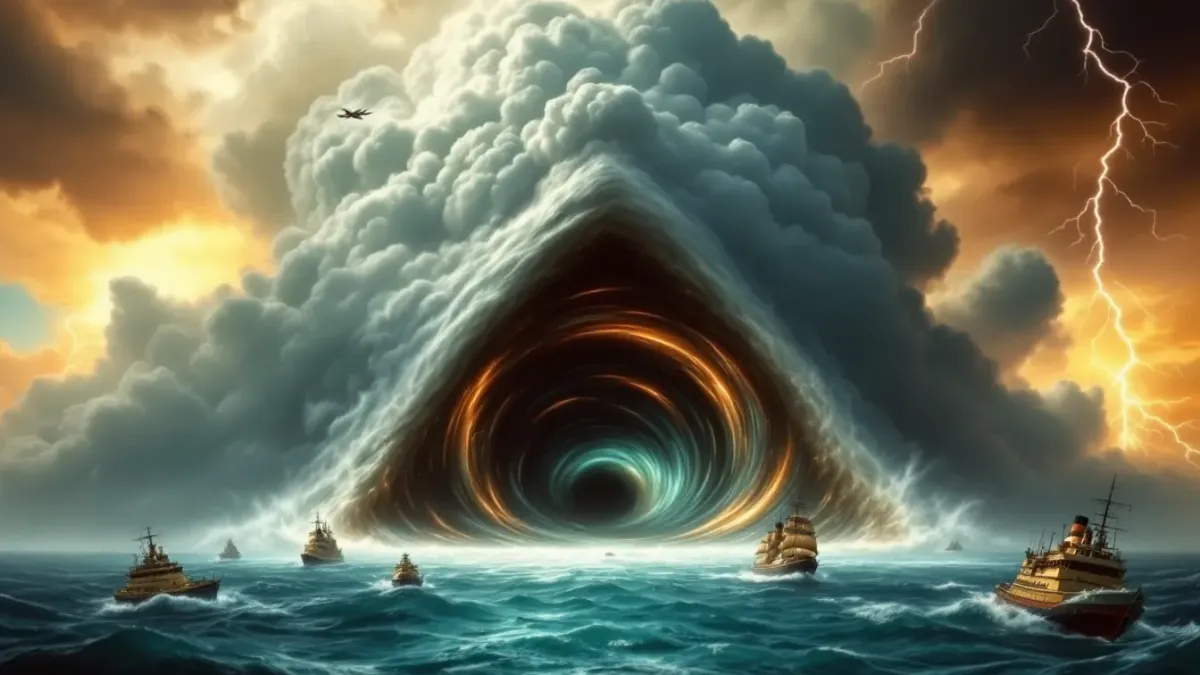
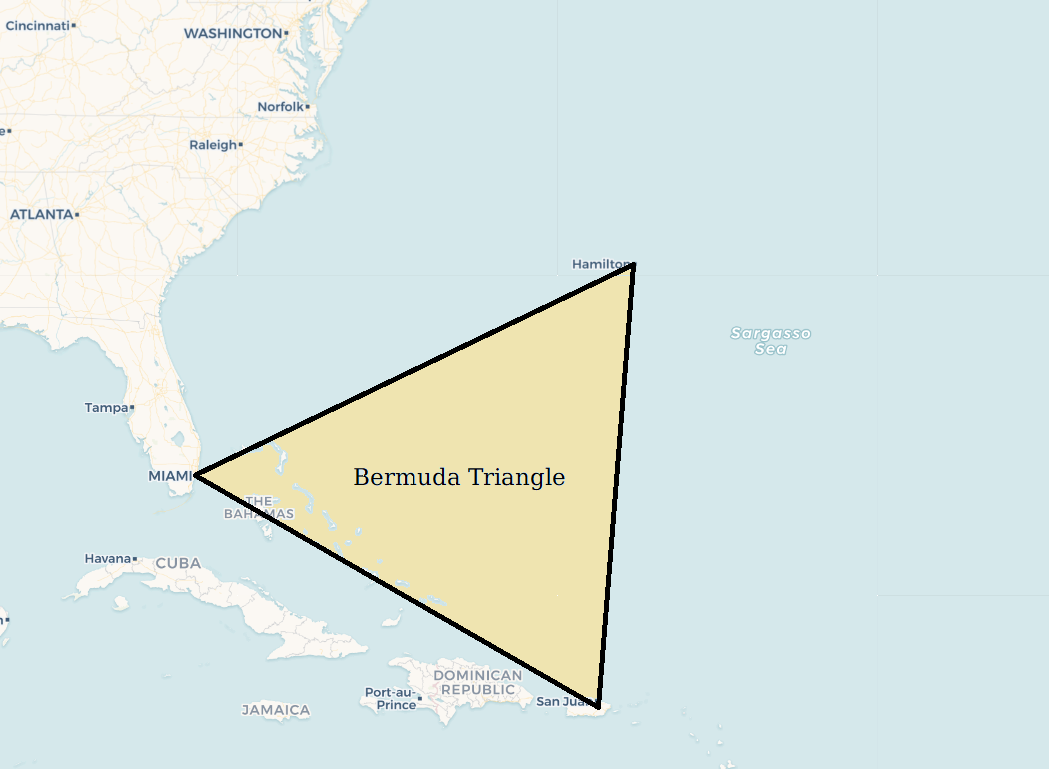
The Bermuda Triangle has long captured the human imagination ever since Christopher Columbus set sail to the west in the 15th century. Located in the Atlantic Ocean, it can be found on the map by plotting a triangle with its corners at Miami, Puerto Rico, and Bermuda. Roughly the size of Alaska at more than 500,000 square miles, it is infamous for stories of ships and aircraft vanishing without a trace. While some folks write these tales off as mere myths or tall stories, others feel there’s something genuinely puzzling about the place. Let’s take a closer look at the mysteries and the ideas people have come up with about this fascinating corner of the world.
Historical Mysteries: Vanishing Without a Trace
One of the most talked-about disappearances in the Triangle’s history is the USS Cyclops. Back in 1918, this huge Navy ship – a whopper, over 500 feet long – was hauling 11,000 tons of cargo and 309 crew members through those waters. And then… it just vanished. No distress calls, no wreckage ever found. It’s a puzzle that still stirs debate today. What makes it even more striking is that two of its sister ships, the Nereus and Proteus, also disappeared in the same general area decades later. Cases like these certainly fuel the speculation about something unusual lurking beneath the surface in the Triangle.
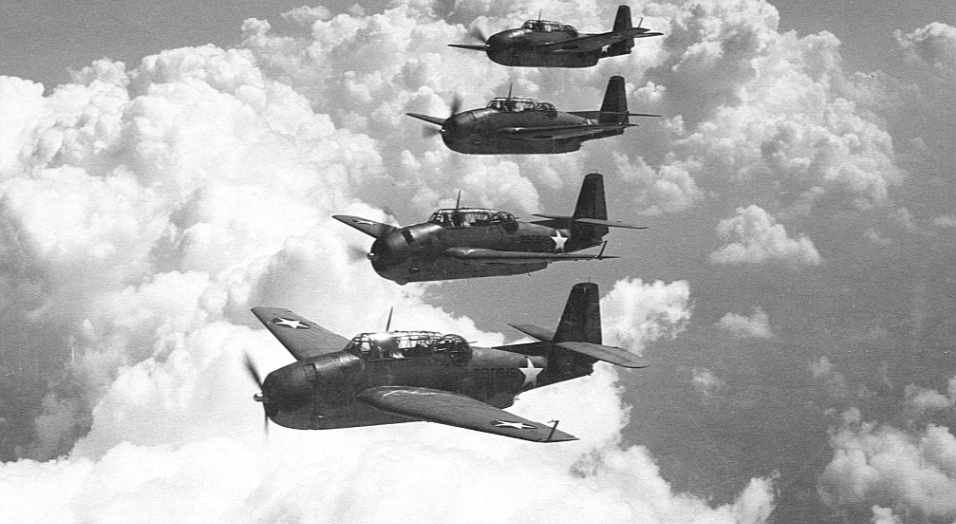
Flight 19: The Lost Squadron
Then there's the case of Flight 19, which adds a different twist to the mystery. Back in 1945, a group of five U.S. Navy bombers took off from Florida for a routine training mission. Things quickly went wrong. The experienced pilots started reporting they couldn't figure out where they were, even though the sky was clear. They seemed disoriented, lost in plain sight. They lost contact, and despite a search effort that also saw a rescue plane disappear, nothing – no wreckage, no bodies – was ever found. The Navy’s official report described it simply as bewildering – “like flying to Mars.”
Columbus’s Strange Encounters
While we often associate the Bermuda Triangle with newer, naval, and modern aviation incidents, some of the earliest accounts of weird happenings in that region come from none other than Christopher Columbus himself, way back in 1492. His journals during his first transatlantic voyage note strange occurrences while sailing through waters that loosely match the Triangle’s later-defined boundaries. Though nobody called it the "Bermuda Triangle" back then, Columbus’s experiences quickly added to the sense of legend and rumor hovering over the area, sometimes earning it nicknames like the “Devil’s Triangle.”
Jumping into Columbus's logbook for September 13th, 1492, he wrote about how his compass wasn't behaving right. The needle seemed to shift off course, pulling northwest at night and even more off kilter the next morning. To Columbus and his crew, this was unsettling, maybe hinting at some strange magnetic pull. But, as we now understand, this was actually a relatively common navigational challenge – the difference between magnetic north and true north, a phenomenon sailors have always had to account for. Still, in the moment, it must have felt quite odd.
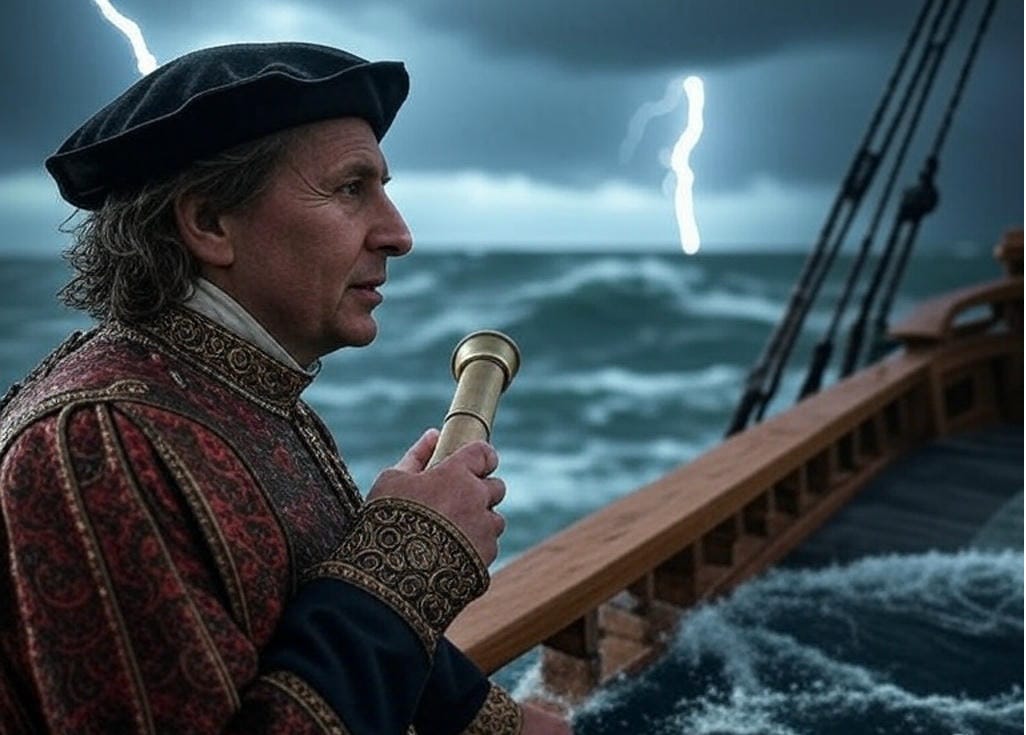
Beyond the compass quirks, Columbus described other strange things. He noted that the stars in the night sky weren't where they were supposed to be – they seemed to be moving erratically. He also mentioned seeing what looked like a flickering candle bobbing over the water ahead. And then, there was the bigger event: his description of an “awe-inspiring flame of fire” suddenly rising from the deep. In an era with limited scientific explanation, these events certainly contributed to the area gaining a reputation for the inexplicable.
Scientific Theories: Nature’s Hidden Forces
Rogue Waves: Giants of the Deep
Modern science has offered some potential explanations. One popular theory points to rogue waves – giant, towering walls of water that can seemingly appear out of nowhere, sometimes exceeding 100 feet tall. For a long time, these were thought to be just legends, but satellite imagery confirmed their existence back in 1995. Could these massive waves, capable of swamping even large ships instantly, be swallowing vessels whole and leaving almost no debris behind?
Rogue Wave video from ScienceAlert
Methane Hydrates: Ocean Floor Bombs?
Another idea getting attention centers on methane hydrates—giant pockets of frozen methane gas trapped beneath the ocean floor in that region. If these were to suddenly erupt, the theory goes, the gas mixing into the water could make the sea surface less dense, causing ships to sink like stones. Bubbles bursting to the surface could also potentially choke the engines of low-flying aircraft. It's an intriguing possibility, but like the rogue wave theory, one that seems unlikely to explain every incident reported in the Triangle. More likely, scientists think a combination of factors might be at play.
Modern Cases: Technology Meets Mystery
The El Faro Tragedy
Even today, the Triangle isn't without its tragedies. In 2015, the cargo ship El Faro sailed into Hurricane Joaquin and was lost, claiming all 33 lives aboard. While the wreckage was eventually found (unfortunately, with no survivors), the incident was a stark reminder of just how dangerous navigating these waters can still be, even with all our modern technology. It remains one of the most complex marine disaster investigations.
EL Faro sinking animation by Plane'n Boom
Cutting-Edge Explorations
Of course, people are still trying to figure out what's really going on down there. Efforts to explore the Triangle's secrets are ongoing. Back in 2018, the NOAA's Okeanos Explorer team mapped over 52,000 square kilometers of the seabed there, hoping to find clues. More recently, in 2019, an expedition led by Rob Kraft specifically went looking for answers related to the Flight 19 disappearance. These kinds of missions, packing advanced technology and scientific minds, represent humanity's effort to peer into the deep and hopefully solve some of these long-standing puzzles.
The Enigma of the Bermuda Triangle
So, what’s the verdict on the Bermuda Triangle? It still presents a fascinating puzzle. The sheer number of disappearances, or at least incidents reported without clear explanations, within its boundaries has drawn all kinds of attention for decades. Part of the challenge is that no single theory seems to cover everything.
It’s probably not just one thing. For instance, while massive rogue waves might explain some ship disappearances, they don’t account for planes vanishing. On the other hand, the idea of methane gas bubbling up could affect both ships (by decreasing water density) and planes (by messing with engines), but doesn't neatly explain reports of compasses going haywire or other electromagnetic weirdness sailors have described.
The concept of the "Bermuda Triangle" really started gaining traction after an article by Vincent Gaddis in 1964, titled “The Deadly Bermuda Triangle.” He pointed out that the number of disappearances seemed unusually high for such a relatively small patch of ocean, arguing it defied the usual odds you'd expect by chance alone. This idea that the disappearances aren't just random flukes adds another layer to the mystery.
And let’s not forget the sheer scale and depth of the ocean itself. The region includes some incredibly deep waters—areas that are as deep, if not deeper, than where the Titanic rests. Searching these vast, dark depths is incredibly difficult, and current technology might still be limited in retrieving evidence. Wrecks and clues could be down there, hidden from us.
Conclusion: A Puzzle Yet Unsolved
In the end, the Bermuda Triangle remains this compelling mix of natural phenomena and enduring mystery. While plenty of people remain skeptical and point to human error or simple bad luck, the pattern of events, when you look at it, is hard to ignore. Ideas like rogue waves, methane hydrates, and genuine magnetic anomalies suggest that the combination of conditions in that part of the Atlantic might be uniquely dangerous or strange. Instead of just filing it away as folklore, the scientific community keeps trying to understand it, learning more about oceanography and meteorology in the process.
Ultimately, stories about the Bermuda Triangle remind us just how much we don't know, even in our advanced age. The ocean holds vast secrets, and its power remains something to be respected. Whether it’s legend or science, the Bermuda Triangle continues to capture our curiosity and stand as a testament to the enduring mysteries of our world.
Sources
- [NOAA expedition data]
- [El Faro disaster analysis]
- [Rogue wave research]
- [Gas hydrate studies]
- [Historical accounts of Columbus]
- [Modern research trends]
- https://www.youtube.com/watch?v=2fk_NFJvCUM
- https://www.youtube.com/shorts/XRY6vxmchl0
- https://www.youtube.com/watch?v=_dMN1Y-mCw8
- https://youtu.be/hru9m-36ObM